Command Palette
Search for a command to run...
Online Tutorial | UC Berkeley/NVIDIA and Others Release Gsplat, an open-source 3DGS Library That Saves 4x GPU Memory and Reduces Training Time by 10%.
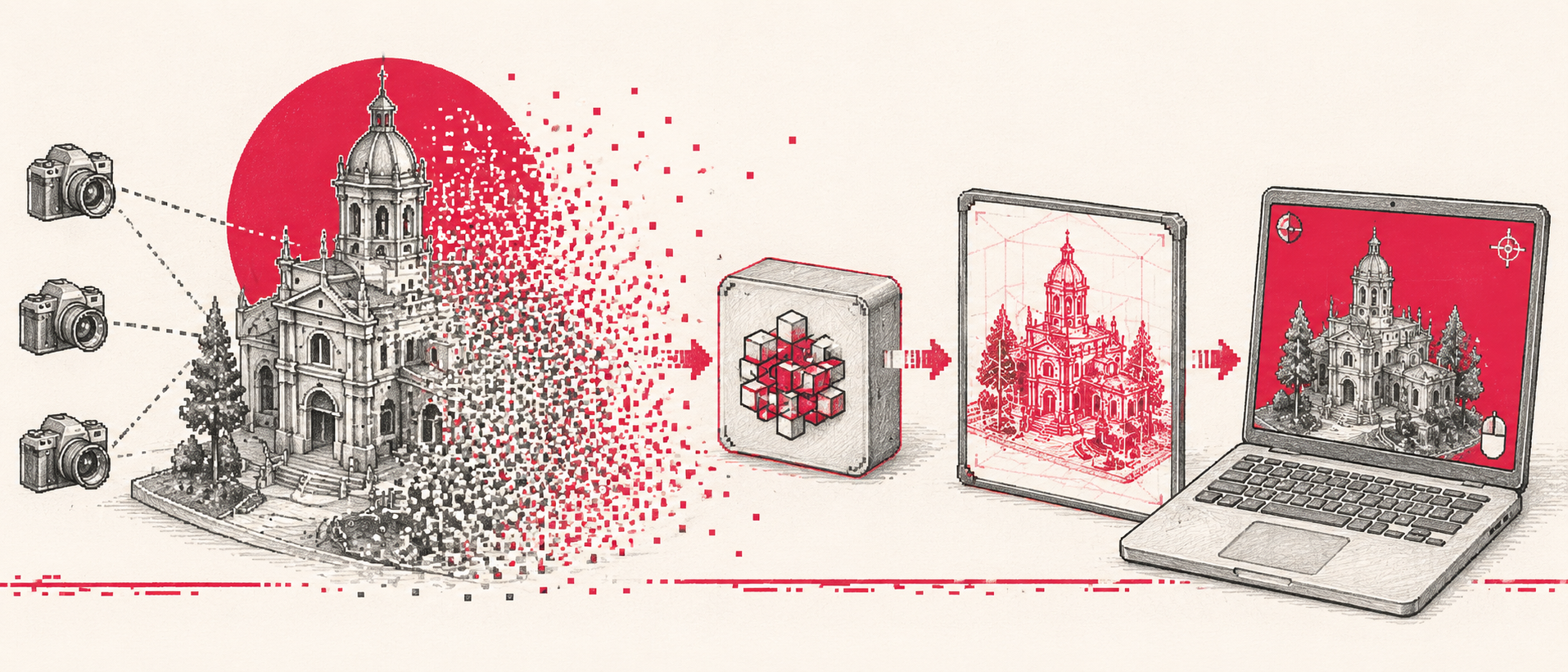
Since the emergence of "3D Gaussian Splatting for Real-Time Rendering of Radiance Fields" in 2023, 3DGS (3D Gaussian Splatting) has rapidly become one of the most watched technical approaches in the field of 3D reconstruction and new perspective compositing. Compared to traditional NeRF,**3DGS has made groundbreaking progress in rendering speed and visual quality, making real-time high-fidelity 3D scene reconstruction possible.**However, with the rapid growth of research and industrial applications, a new problem has gradually emerged: the original implementation has high requirements for video memory and computing resources, and its training efficiency and engineering scalability are limited. Researchers often need to spend a lot of time on low-level optimization in order to apply it to more complex scenarios and tasks.
Recently, gsplat, an open-source project jointly developed by UC Berkeley, NVIDIA, ShanghaiTech University, Amazon, Meta, and other institutions, has provided a new solution to this problem. As a foundational library specifically designed for training and developing Gaussian Splatting methods,**While preserving the original 3DGS rendering quality, gsplat has systematically restructured and optimized the underlying training framework.**It has become one of the most important infrastructures in the current Gaussian Splatting ecosystem.
From an architectural design perspective,**gsplat adopts a front-end and back-end separation approach:**The front-end provides a Python interface deeply integrated with PyTorch, facilitating rapid development and experimentation for researchers; the back-end, based on a highly optimized CUDA Kernel, enables high-performance differentiable rasterization computation. Official experimental results show that, compared to the original implementation,**gsplat can save up to 4 times the GPU memory and reduce training time by approximately 10%~15%.**It significantly reduces the resource threshold for large-scale scene training.
In addition to performance improvements, gsplat also introduces an adaptive Gaussian density control mechanism, which can automatically add or remove Gaussian points during training to achieve more efficient scene representation. It also supports multiple data sources such as COLMAP, SfM point cloud, and LiDAR point cloud, and has a built-in real-time Web Viewer, which allows users to view and interact with 3D scenes directly in the browser.
Currently, HyperAI (hyper.ai) has launched the "Gsplat 3D Gaussian Splash Training and Visualization" tutorial, lowering the deployment threshold and helping to quickly validate models. ⬇️
Run online:https://go.hyper.ai/19Pn8
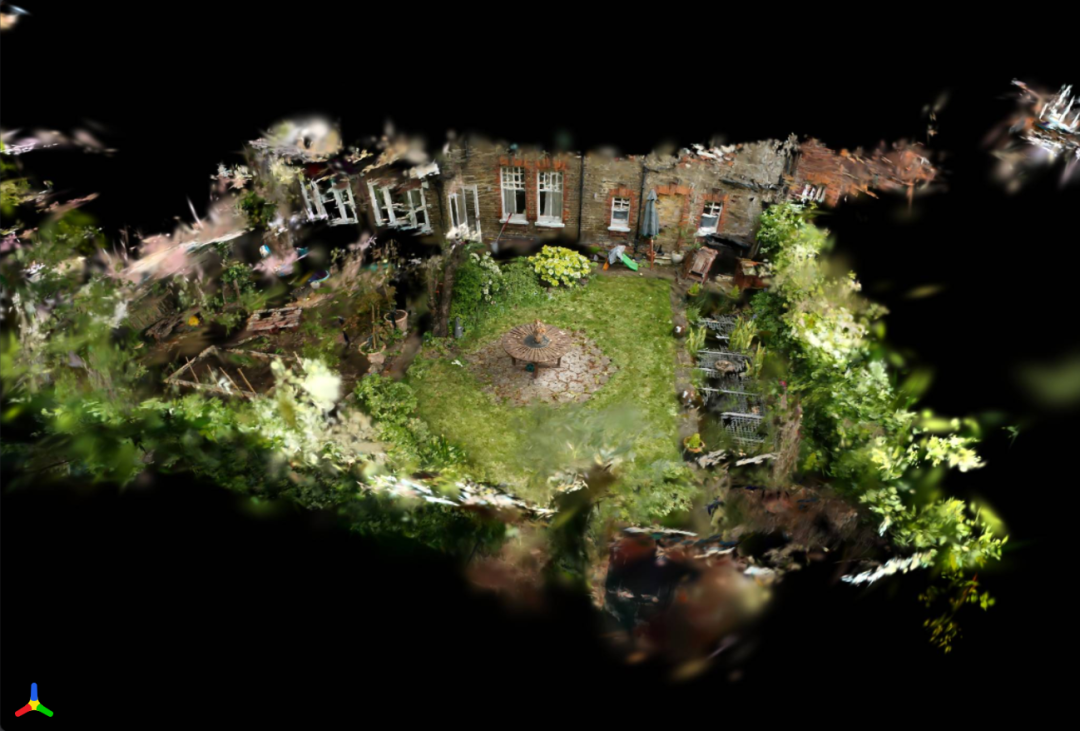
Demo Run
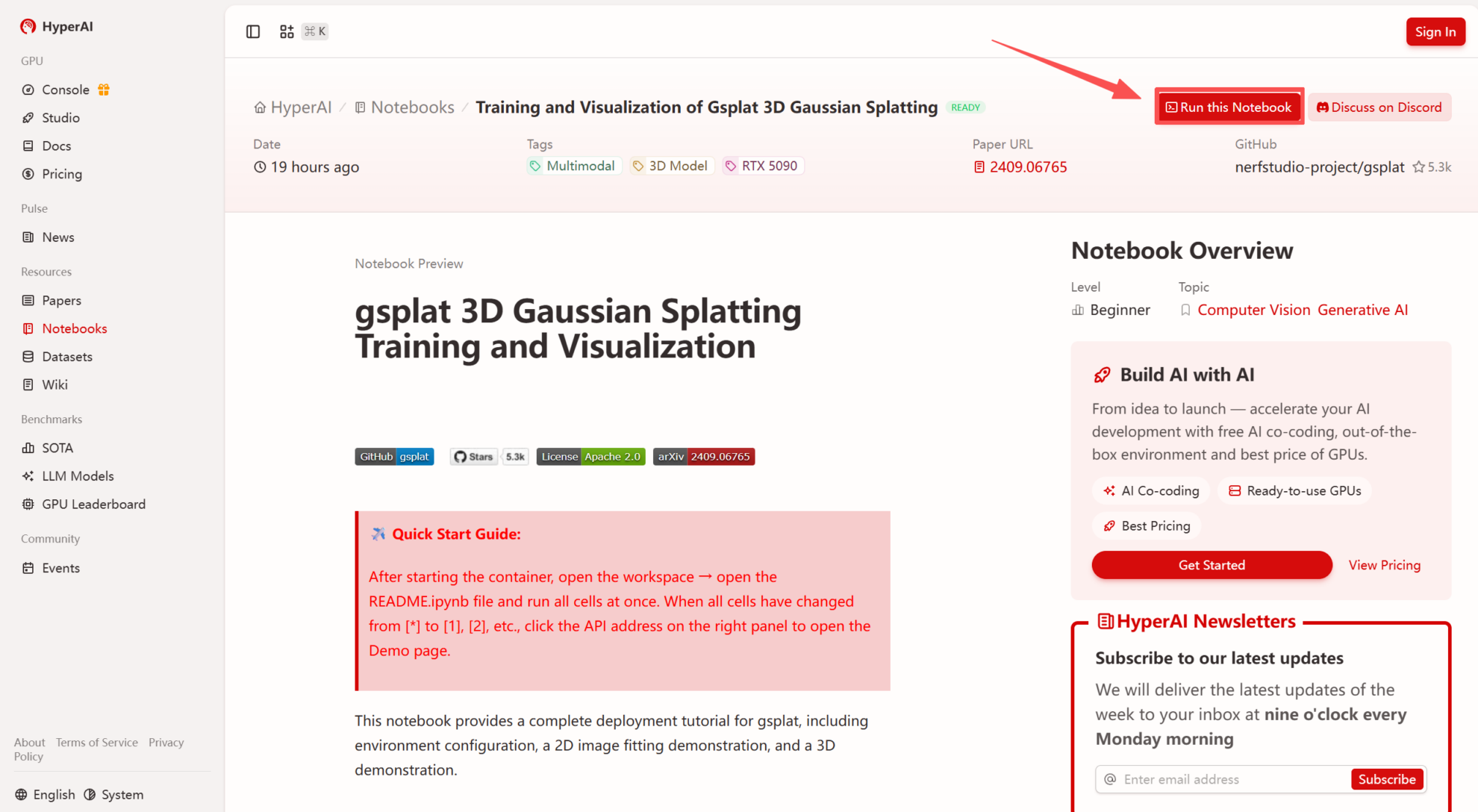
1. After entering the hyper.ai homepage, select the "Tutorials" page, or click "View More Tutorials", select "Gsplat 3D Gaussian Splash Training and Visualization", and click "Run this tutorial".

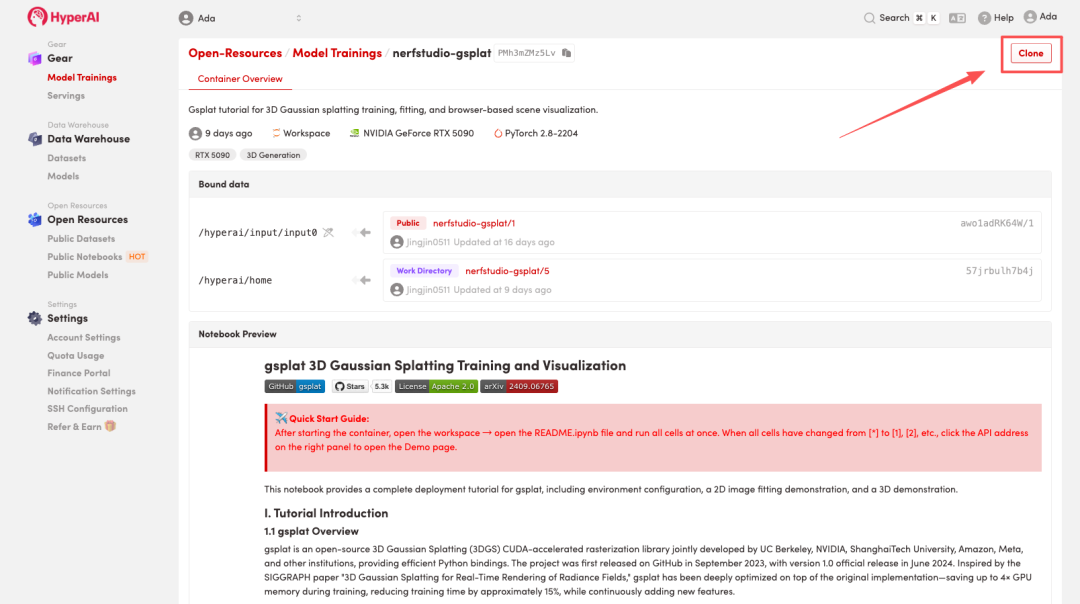
 2. After the page redirects, click "Clone" in the upper right corner to clone the tutorial into your own container.
Note: You can switch languages in the upper right corner of the page. Currently, Chinese and English are available. This tutorial will show the steps in English.
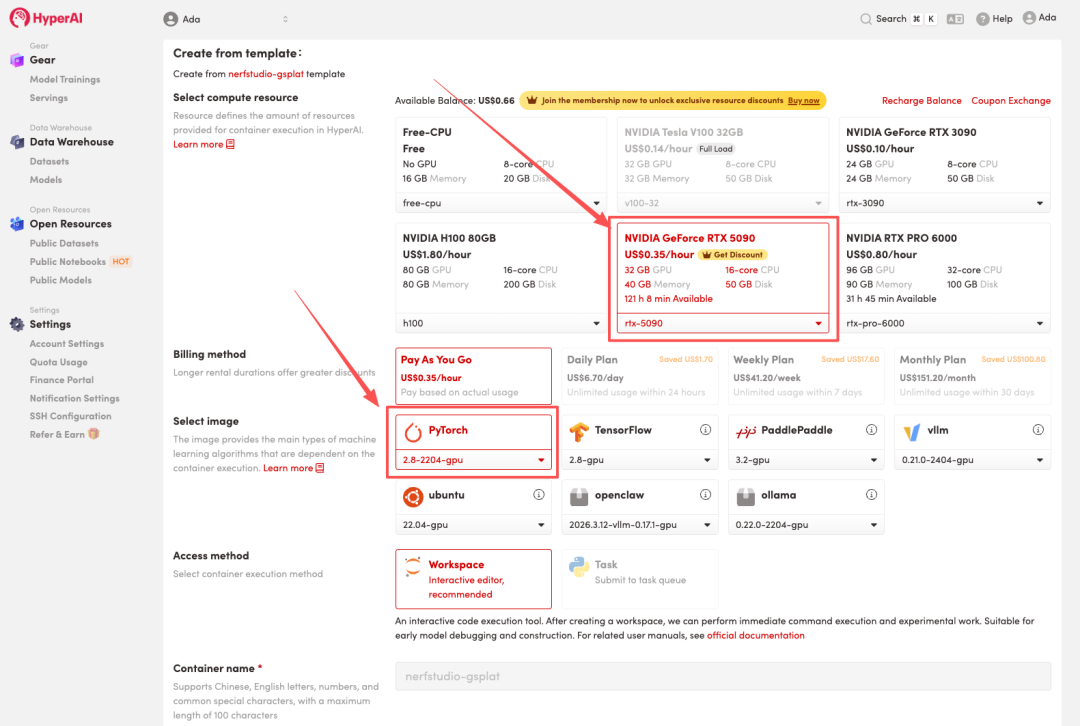
 3. Select the "NVIDIA RTX 5090" and "PyTorch" images, and click "Continue job execution".
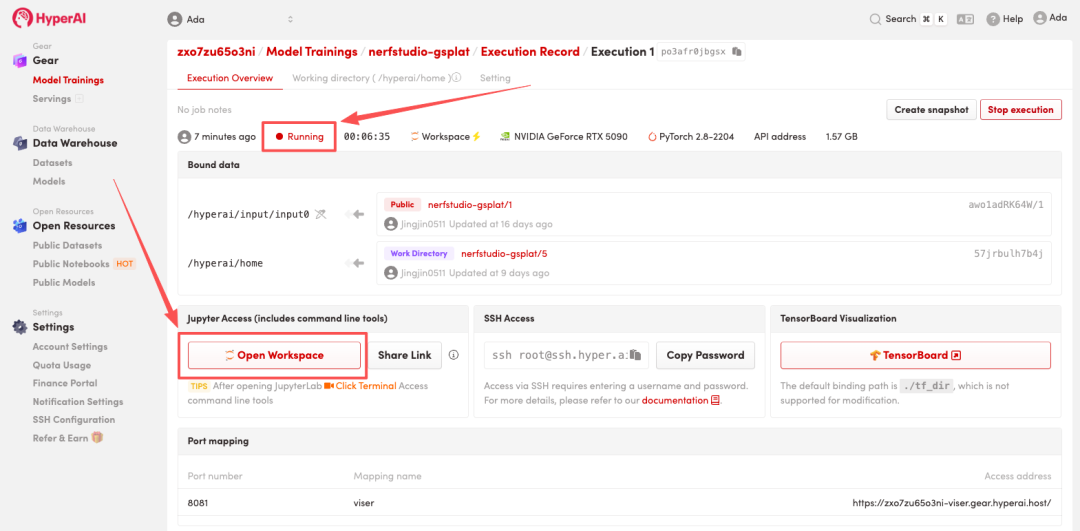
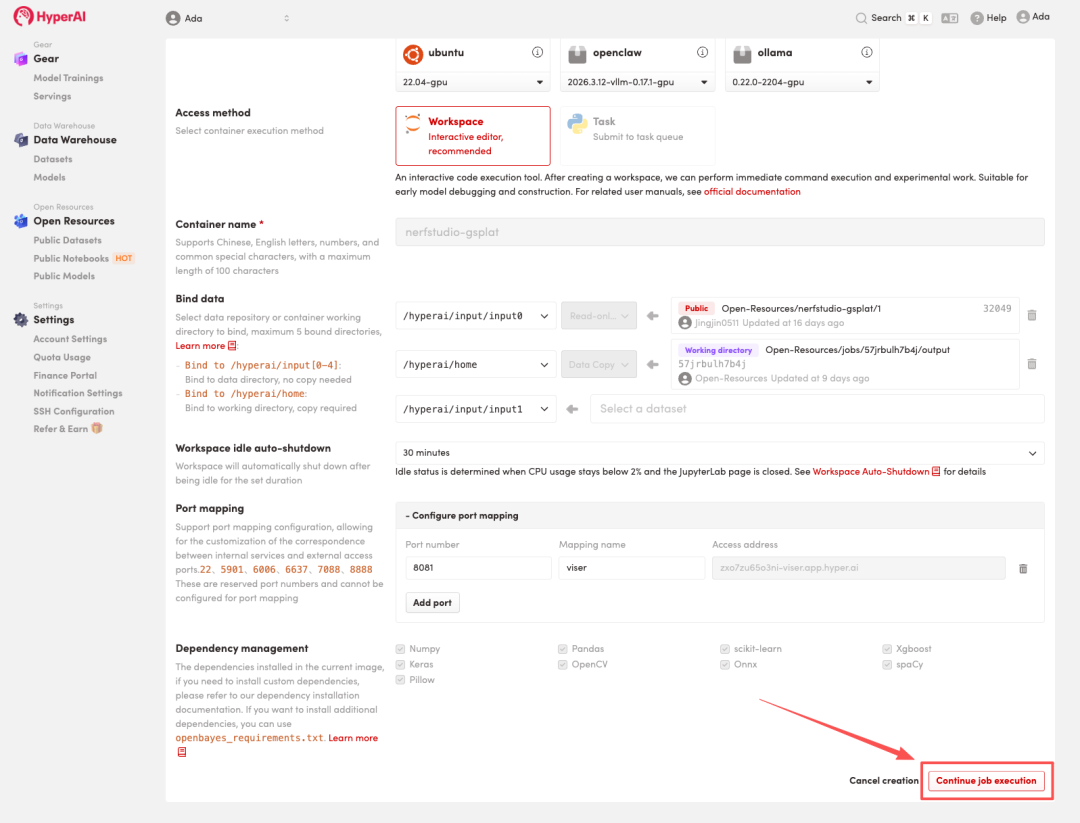 4. Wait for resources to be allocated. Once the status changes to "Running", click "Open Workspace" to enter the Jupyter Workspace.
Effect display
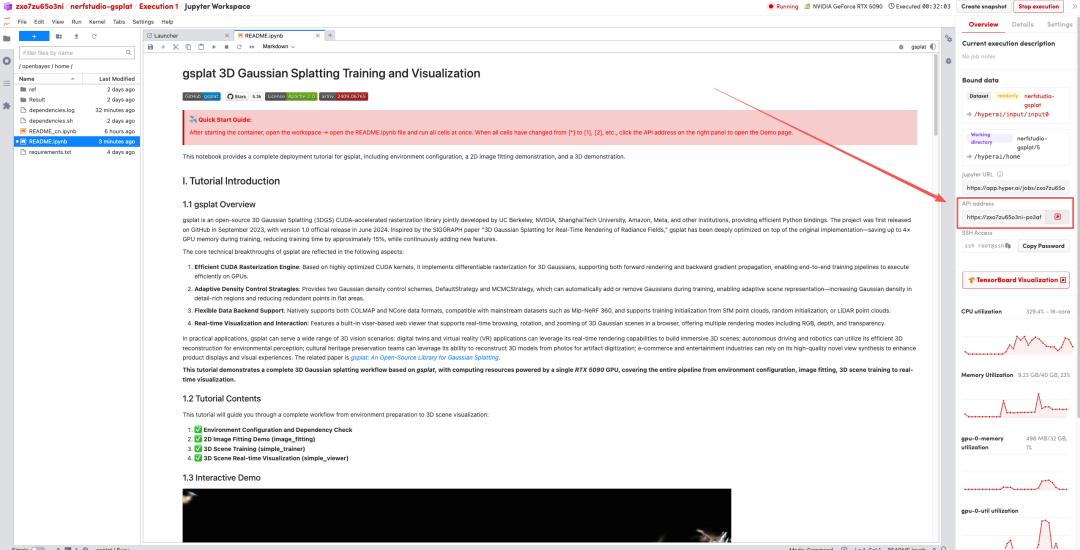
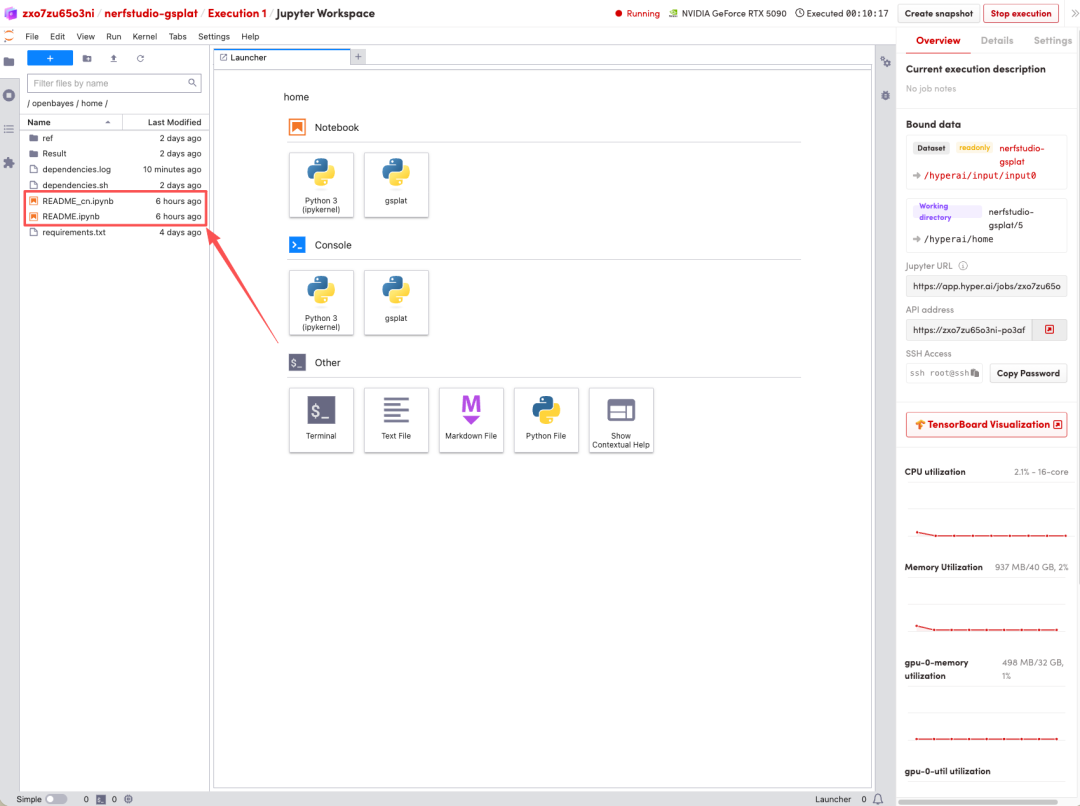
1. After the page redirects, click on the README file on the left, and then click on Run at the top.
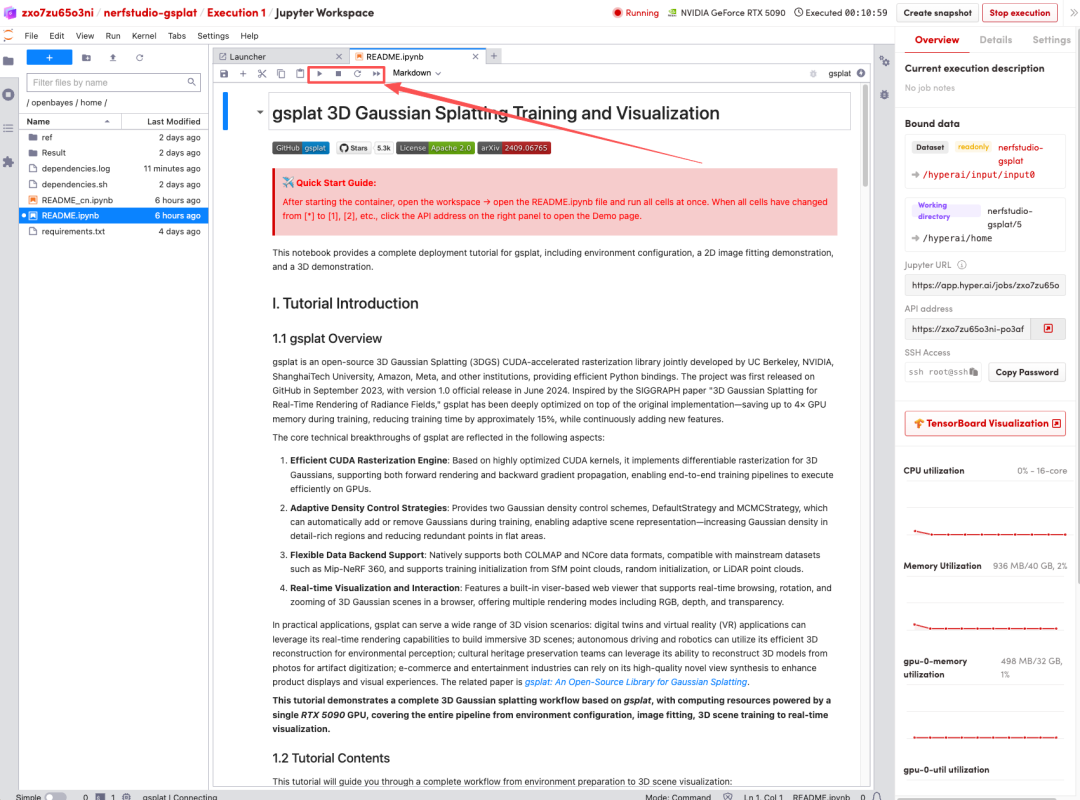 2. After the process is complete, click the API address on the right to open the Demo interface.