Command Palette
Search for a command to run...
News
Latest AI news and updates from around the world
HyperAI has compiled a collection of high-quality inference datasets, covering multi-domain, multi-task inference, synthetic inference training data, scientific research benchmarks, and large-scale question-answering data, and supports downloading or using the datasets online.

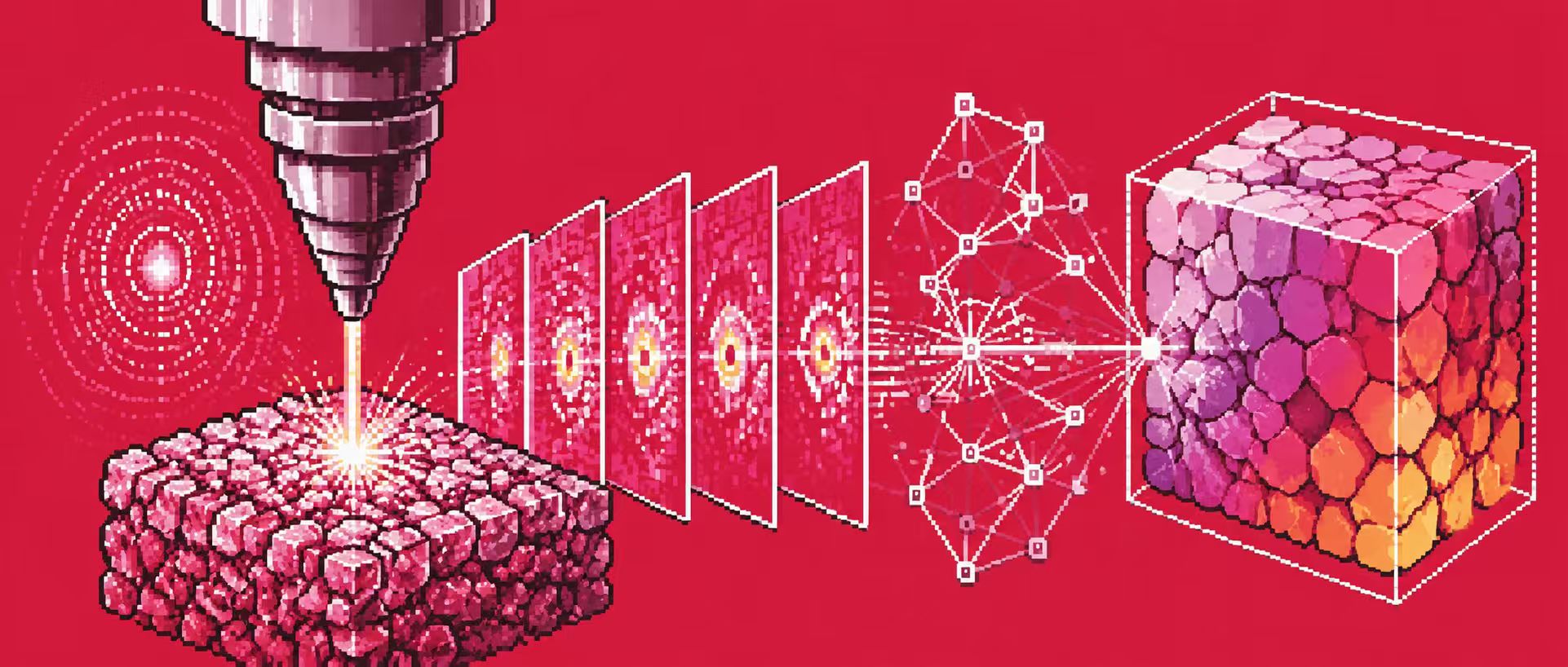
Researchers at MIT have proposed a novel method called Wave-Former, which enables high-precision 3D shape reconstruction of fully occluded, diverse everyday objects. This method not only addresses the challenges of high signal-to-noise ratios and severe occlusion, but also achieves high-fidelity reconstruction in real-world environments based on synthetic data training through an innovative physical perception training framework. In direct comparison with state-of-the-art baseline methods, Wave-Former improves recall from 541 TP3T to 721 TP3T while maintaining a high accuracy of 851 TP3T.

At GTC 2026, NVIDIA released three open-source projects: NVIDIA Isaac GR00T, Kimodo, and SOMA-X. These projects address the same problem from three levels: decision-making, generation, and representation—how to enable machines to perform complex actions more naturally and efficiently. NVIDIA also released FDFO, a training method for diffusion models, providing underlying support for these capabilities from the perspective of generative model optimization.

A research team from the University of Minnesota Twin Cities has developed an innovative knowledge-guided machine learning model whose algorithmic structure is directly inspired by hydrological science and is called a Factorized Hierarchical Neural Network (FHNN). The study shows that on a timescale of 2–7 days after forecast release, the model performs comparably to or even better than the National Weather Service's flood forecasts, and outperforms mainstream machine learning methods that do not incorporate physical science knowledge into their structure.

A joint research team from NVIDIA, Oxford University, the Quebec Artificial Intelligence Institute, and other institutions proposed the Proteína-Complexa framework, which aims to bridge the gap between generative and illusionary methods. It unifies the basic generative model and the inference-time optimization mechanism into the same system, enabling optimal de novo binder design without the need for additional sequence redesign steps.

To help developers experience OpenClaw's capabilities in real-world applications, HyperAI has launched "🦞 OpenClaw: Running it using the API via Free-CPU" and "🦞 OpenClaw GPU Running Tutorial," integrating OpenClaw into various social applications to achieve a wide range of automated tasks.

An open-source project called LLM Course has garnered widespread attention since its release, receiving 77,000 stars to date. It reorganizes knowledge scattered across papers, blogs, and code practices into a clearly structured and well-defined learning system. HyperAI has uploaded the Notebook demonstration portion of LLM Course to its "Tutorials" section, with all runtime environments fully configured and ready to use out of the box.

Google Research has released the open-source flood dataset Groundsource, which extracts validated ground information from unstructured data to map the footprints of historical disasters with unprecedented accuracy. Researchers automated the processing of over 5 million news reports from more than 150 countries, ultimately compiling over 2.6 million records of historical flood events, providing an unprecedented scale and coverage of data for global flood research.

Jensen Huang delivered a passionate two-hour presentation at GTC 2026, releasing a series of new products and open-source achievements.

A joint research team from Carnegie Mellon University, the University of Wrocław in Poland, and the University of Florida has proposed an AI-driven quantum refinement method called AQuaRef. This method is based on AIMNet2 machine learning of atomic potential functions and has been custom-trained for refinement tasks. While maintaining near-classical force field computation efficiency, it can approximate quantum mechanical calculation results well, providing a new technical path for all-atomic quantum refinement of biomolecules.

HyperAl has compiled a series of highly valuable and widely applicable tutorials and datasets from March 9th to March 13th, covering multiple fields such as speech generation, text-to-image processing, and large-scale models.

A research team at Stanford University has proposed Merlin, the first native 3D visual language model for abdominal CT scans, along with a dataset containing 25,494 paired abdominal CT scans and radiology reports.

The Chinese University of Hong Kong, in collaboration with the Macao Polytechnic University, Zhejiang University, the Second Xiangya Hospital of Central South University, and the University of Electronic Science and Technology of China, proposed a selective fusion modeling paradigm. Based on the understanding that "chemical variation is a local perturbation of the biological semantic space", they designed a general framework, Bi-TEAM, to inject local chemical variation into the global protein background.

HyperAI's "Tutorials" section has launched online tutorials for running popular open-source models such as Qwen, DeepSeek, Gemma, Llama, and GLM using free CPUs. It provides a complete deployment process from environment preparation and model download to inference and execution, allowing users to complete model inference experience and basic development testing without having to deploy a complex local environment.

Researchers from the Swiss Federal Institute of Technology in Lausanne (EPFL) have proposed a novel model architecture, DYNAMI-CAL GraphNet, which explicitly guarantees the conservation of linear momentum and angular momentum by directly embedding these laws into the model structure. Experimental results demonstrate that DYNAMI-CAL GraphNet offers significant advantages in fields requiring accurate, interpretable, and real-time modeling of complex multibody dynamical systems, such as robotics, aerospace engineering, and materials science.

To further refine HyperAI's product experience and core capabilities, we are officially launching a new round of internal testing. We hope to invite a select group of real users to experience the platform's capabilities and contribute to polishing product details. 💻 If you have a long-term need for cloud platforms and GPU computing power, 🙋♀️ if you have a technical background [...]

"Qwen3-TTS: High-Quality Controllable Multilingual Speech Synthesis Demo" is now available on the "Tutorials" section of the HyperAI website (hyper.ai). Come and experience 3-second speech cloning!

A research team from Telecom Sud-Paris and Paris-Saclay University in France has proposed a machine learning framework that integrates ensemble learning with SHAple Additive exPlanations (SHAP) analysis, providing a new solution for assessing the mortality risk of HCC liver transplant candidates.

HyperAl has compiled a series of highly valuable and widely applicable tutorials and datasets from versions 3.2 to 3.6, covering multiple fields such as speech generation, text-to-image processing, and large-scale models.

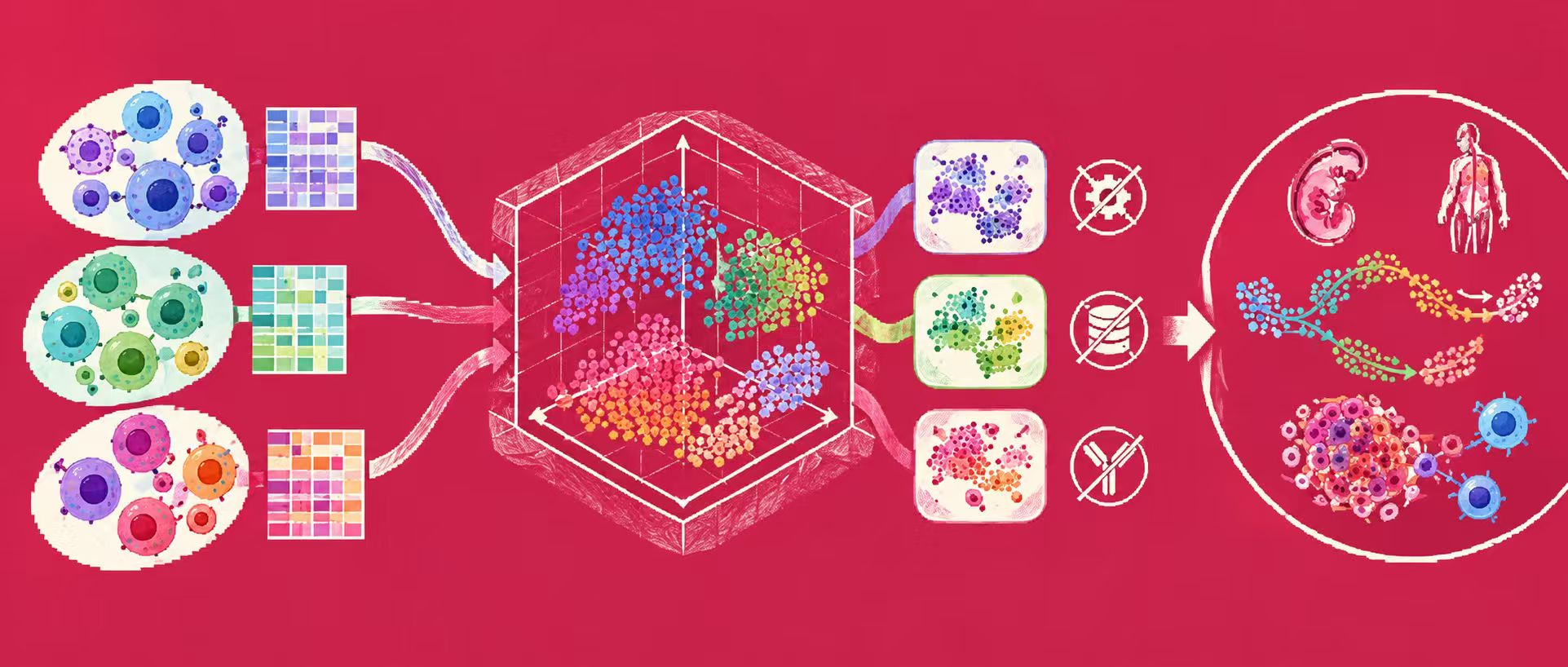
A joint research team from MIT and ETH Zurich has proposed a computational framework called APOLLO, which is an autoencoder that learns partially overlapping latent spaces through latent variable optimization. By explicitly modeling shared information and modality-specific information, APOLLO provides a feasible technical path for more comprehensive and accurate analysis of cell states and their regulatory logic.

A research team from MIT has proposed a deep learning-based language model, Pichia-CLM, for codon optimization in the industrial host Pichia pastoris to improve the yield of recombinant proteins. The researchers experimentally validated Pichia-CLM on six protein classes of varying complexity and consistently observed higher expression yields compared to four commercial codon optimization tools.

HyperAl has compiled a series of highly valuable and widely applicable tutorials and datasets from February 22nd to 27th, covering multiple fields such as OCR, multimodal, and large language models.

A joint research team comprised of the University of Helsinki in Finland, the Mediterranean Climate Change Research Centre, and the University of Salento in Italy has developed SeaCast, a graph neural network model specifically designed for regional ocean forecasting. Once trained, this model can generate a 15-day forecast across 18 vertical levels at a 1/24° grid in just 20 seconds on a single GPU, significantly faster than physical base models running on CPU clusters.

A research team from Cornell University has developed a robust, interpretable, and data-efficient framework, SCAN, for modeling and interpreting salt-solvent chemistry. This framework effectively handles long-tailed data and captures the complete spectrum of salt-solvent formulations. The researchers applied SCAN to non-aqueous electrolyte (NAE) systems, achieving a baseline error of 0.372 mS·cm⁻¹ in conductivity prediction, reducing the prediction error by 65.31 TP³T compared to the baseline model.

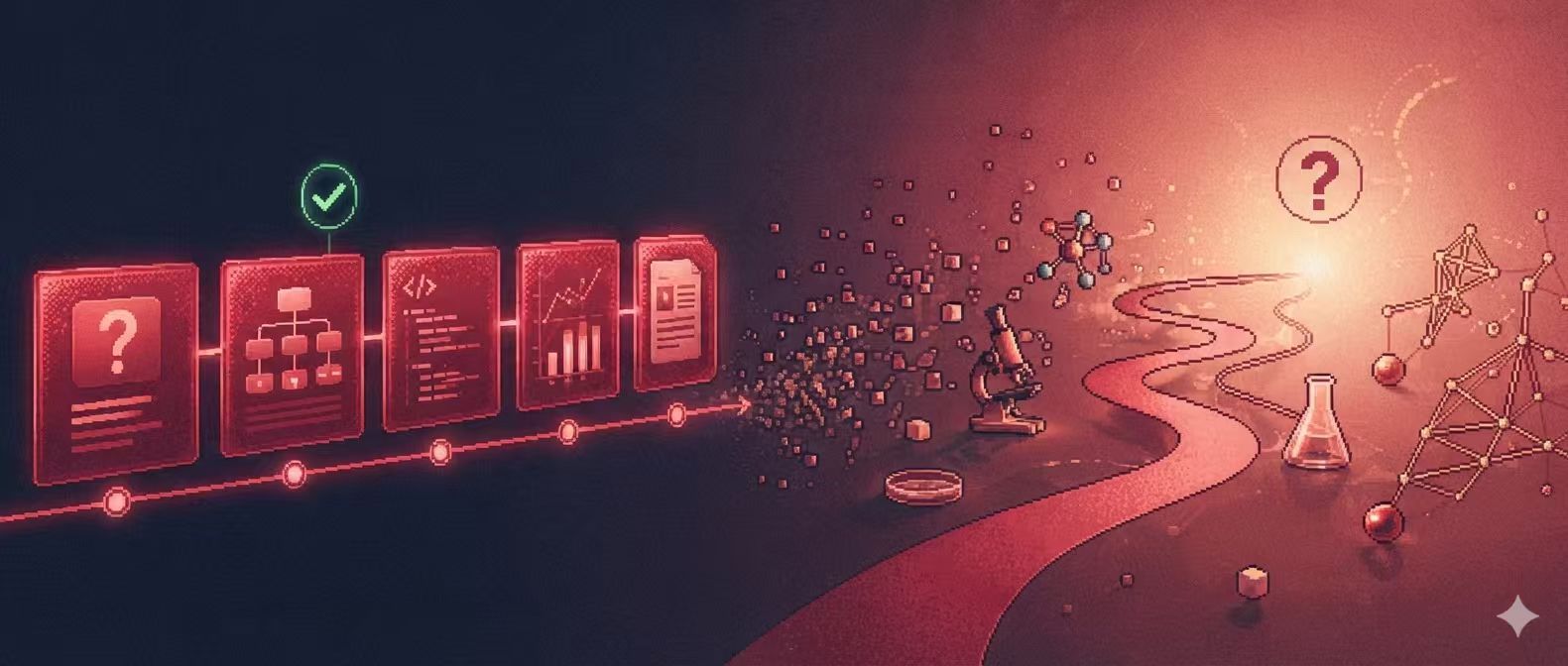
Professor Tzu-Yu Song of the University of Michigan, Ann Arbor, in collaboration with Wei-Ran Jiang, Vice President of R&D at Farasis Energy, has innovatively proposed a scientific machine learning method called "discovery learning." Inspired by educational psychology, this method organically integrates active learning, physically constrained learning, and zero-shot learning to construct a human-like closed-loop learning framework for reasoning.

WorldArena, proposed by institutions such as Tsinghua University, Peking University, University of Hong Kong, Princeton University, Chinese Academy of Sciences, Shanghai Jiao Tong University, University of Science and Technology of China, and National University of Singapore, is the first to integrate video generation quality with embodied task functionality, constructing a complete evaluation framework from "looks real" to "is truly usable".

HyperAI has compiled a collection of high-quality inference datasets, covering multi-domain, multi-task inference, synthetic inference training data, scientific research benchmarks, and large-scale question-answering data, and supports downloading or using the datasets online.

Researchers at MIT have proposed a novel method called Wave-Former, which enables high-precision 3D shape reconstruction of fully occluded, diverse everyday objects. This method not only addresses the challenges of high signal-to-noise ratios and severe occlusion, but also achieves high-fidelity reconstruction in real-world environments based on synthetic data training through an innovative physical perception training framework. In direct comparison with state-of-the-art baseline methods, Wave-Former improves recall from 541 TP3T to 721 TP3T while maintaining a high accuracy of 851 TP3T.

At GTC 2026, NVIDIA released three open-source projects: NVIDIA Isaac GR00T, Kimodo, and SOMA-X. These projects address the same problem from three levels: decision-making, generation, and representation—how to enable machines to perform complex actions more naturally and efficiently. NVIDIA also released FDFO, a training method for diffusion models, providing underlying support for these capabilities from the perspective of generative model optimization.

A research team from the University of Minnesota Twin Cities has developed an innovative knowledge-guided machine learning model whose algorithmic structure is directly inspired by hydrological science and is called a Factorized Hierarchical Neural Network (FHNN). The study shows that on a timescale of 2–7 days after forecast release, the model performs comparably to or even better than the National Weather Service's flood forecasts, and outperforms mainstream machine learning methods that do not incorporate physical science knowledge into their structure.

A joint research team from NVIDIA, Oxford University, the Quebec Artificial Intelligence Institute, and other institutions proposed the Proteína-Complexa framework, which aims to bridge the gap between generative and illusionary methods. It unifies the basic generative model and the inference-time optimization mechanism into the same system, enabling optimal de novo binder design without the need for additional sequence redesign steps.

To help developers experience OpenClaw's capabilities in real-world applications, HyperAI has launched "🦞 OpenClaw: Running it using the API via Free-CPU" and "🦞 OpenClaw GPU Running Tutorial," integrating OpenClaw into various social applications to achieve a wide range of automated tasks.

An open-source project called LLM Course has garnered widespread attention since its release, receiving 77,000 stars to date. It reorganizes knowledge scattered across papers, blogs, and code practices into a clearly structured and well-defined learning system. HyperAI has uploaded the Notebook demonstration portion of LLM Course to its "Tutorials" section, with all runtime environments fully configured and ready to use out of the box.

Google Research has released the open-source flood dataset Groundsource, which extracts validated ground information from unstructured data to map the footprints of historical disasters with unprecedented accuracy. Researchers automated the processing of over 5 million news reports from more than 150 countries, ultimately compiling over 2.6 million records of historical flood events, providing an unprecedented scale and coverage of data for global flood research.

Jensen Huang delivered a passionate two-hour presentation at GTC 2026, releasing a series of new products and open-source achievements.

A joint research team from Carnegie Mellon University, the University of Wrocław in Poland, and the University of Florida has proposed an AI-driven quantum refinement method called AQuaRef. This method is based on AIMNet2 machine learning of atomic potential functions and has been custom-trained for refinement tasks. While maintaining near-classical force field computation efficiency, it can approximate quantum mechanical calculation results well, providing a new technical path for all-atomic quantum refinement of biomolecules.

HyperAl has compiled a series of highly valuable and widely applicable tutorials and datasets from March 9th to March 13th, covering multiple fields such as speech generation, text-to-image processing, and large-scale models.

A research team at Stanford University has proposed Merlin, the first native 3D visual language model for abdominal CT scans, along with a dataset containing 25,494 paired abdominal CT scans and radiology reports.

The Chinese University of Hong Kong, in collaboration with the Macao Polytechnic University, Zhejiang University, the Second Xiangya Hospital of Central South University, and the University of Electronic Science and Technology of China, proposed a selective fusion modeling paradigm. Based on the understanding that "chemical variation is a local perturbation of the biological semantic space", they designed a general framework, Bi-TEAM, to inject local chemical variation into the global protein background.

HyperAI's "Tutorials" section has launched online tutorials for running popular open-source models such as Qwen, DeepSeek, Gemma, Llama, and GLM using free CPUs. It provides a complete deployment process from environment preparation and model download to inference and execution, allowing users to complete model inference experience and basic development testing without having to deploy a complex local environment.

Researchers from the Swiss Federal Institute of Technology in Lausanne (EPFL) have proposed a novel model architecture, DYNAMI-CAL GraphNet, which explicitly guarantees the conservation of linear momentum and angular momentum by directly embedding these laws into the model structure. Experimental results demonstrate that DYNAMI-CAL GraphNet offers significant advantages in fields requiring accurate, interpretable, and real-time modeling of complex multibody dynamical systems, such as robotics, aerospace engineering, and materials science.

To further refine HyperAI's product experience and core capabilities, we are officially launching a new round of internal testing. We hope to invite a select group of real users to experience the platform's capabilities and contribute to polishing product details. 💻 If you have a long-term need for cloud platforms and GPU computing power, 🙋♀️ if you have a technical background [...]

"Qwen3-TTS: High-Quality Controllable Multilingual Speech Synthesis Demo" is now available on the "Tutorials" section of the HyperAI website (hyper.ai). Come and experience 3-second speech cloning!

A research team from Telecom Sud-Paris and Paris-Saclay University in France has proposed a machine learning framework that integrates ensemble learning with SHAple Additive exPlanations (SHAP) analysis, providing a new solution for assessing the mortality risk of HCC liver transplant candidates.

HyperAl has compiled a series of highly valuable and widely applicable tutorials and datasets from versions 3.2 to 3.6, covering multiple fields such as speech generation, text-to-image processing, and large-scale models.

A joint research team from MIT and ETH Zurich has proposed a computational framework called APOLLO, which is an autoencoder that learns partially overlapping latent spaces through latent variable optimization. By explicitly modeling shared information and modality-specific information, APOLLO provides a feasible technical path for more comprehensive and accurate analysis of cell states and their regulatory logic.

A research team from MIT has proposed a deep learning-based language model, Pichia-CLM, for codon optimization in the industrial host Pichia pastoris to improve the yield of recombinant proteins. The researchers experimentally validated Pichia-CLM on six protein classes of varying complexity and consistently observed higher expression yields compared to four commercial codon optimization tools.

HyperAl has compiled a series of highly valuable and widely applicable tutorials and datasets from February 22nd to 27th, covering multiple fields such as OCR, multimodal, and large language models.

A joint research team comprised of the University of Helsinki in Finland, the Mediterranean Climate Change Research Centre, and the University of Salento in Italy has developed SeaCast, a graph neural network model specifically designed for regional ocean forecasting. Once trained, this model can generate a 15-day forecast across 18 vertical levels at a 1/24° grid in just 20 seconds on a single GPU, significantly faster than physical base models running on CPU clusters.

A research team from Cornell University has developed a robust, interpretable, and data-efficient framework, SCAN, for modeling and interpreting salt-solvent chemistry. This framework effectively handles long-tailed data and captures the complete spectrum of salt-solvent formulations. The researchers applied SCAN to non-aqueous electrolyte (NAE) systems, achieving a baseline error of 0.372 mS·cm⁻¹ in conductivity prediction, reducing the prediction error by 65.31 TP³T compared to the baseline model.

Professor Tzu-Yu Song of the University of Michigan, Ann Arbor, in collaboration with Wei-Ran Jiang, Vice President of R&D at Farasis Energy, has innovatively proposed a scientific machine learning method called "discovery learning." Inspired by educational psychology, this method organically integrates active learning, physically constrained learning, and zero-shot learning to construct a human-like closed-loop learning framework for reasoning.

WorldArena, proposed by institutions such as Tsinghua University, Peking University, University of Hong Kong, Princeton University, Chinese Academy of Sciences, Shanghai Jiao Tong University, University of Science and Technology of China, and National University of Singapore, is the first to integrate video generation quality with embodied task functionality, constructing a complete evaluation framework from "looks real" to "is truly usable".